
Copper Mart
Artisanal Brass Saucepan – Heavy-Gauge Heritage Cookware
★★★★☆ 66 reviewsProduct Details
Description
Compare Non-Toxic Saucepans
Caraway saucepan: $95 · Copper saucepan (Sertodo): from $334 · Brass Saucepan (Copper Mart): from $69
Brass offers 7× better heat conductivity than stainless steel. Unlike Caraway's 2-5 year ceramic coating, tin lining is renewable and lasts the life of the pot.
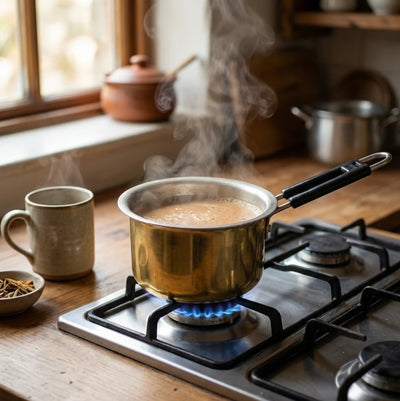
Heavy-gauge brass cookware built for serious cooking. This artisanal brass saucepan is hand-hammered from a single sheet of pure brass by master craftsmen in Jodhpur, India. Tin-lined interior for food-safe cooking. Ideal for simmering sauces, heating milk, making chai, or preparing Ayurvedic concoctions on the stovetop.
Why Cook in Brass?
Brass is an alloy of copper and zinc — two essential trace minerals. It conducts heat more evenly than stainless steel, eliminating the hot spots that cause sauces to scorch. The heavy-gauge construction distributes heat uniformly across the entire cooking surface and retains it longer, so your food stays warm even after you remove it from the flame. Indian households have cooked in brass (pital) for centuries — it's the original non-toxic cookware.
What Makes This Different
Most saucepans sold today are thin stainless steel or aluminum with non-stick coatings that degrade over time, releasing microplastics and chemicals into your food. This saucepan is solid brass with a food-grade tin lining (kalai) — the same lining method used in professional French copper cookware. No PTFE, no PFOA, no ceramic coatings. When the tin wears after years of use, it can be re-applied — extending the pan's life indefinitely.
Product Specifications
- Material: Pure brass body, food-grade tin lining, brass handle
- Construction: Hand-hammered heavy-gauge brass — no joints, no welds
- Interior: Tin-lined (kalai) for food safety
- Heat source: Gas, electric, ceramic stovetop (not induction compatible)
- Coating: None. Zero PTFE, zero PFOA, zero synthetic materials
- Made in: Jodhpur, Rajasthan, India by Manish Metals (est. 1997)
- Care: Hand wash. Polish exterior with lemon and salt. Re-tin when lining wears.
Best For
- Simmering sauces, gravies, and reductions
- Heating milk, making chai, or preparing Ayurvedic kadha
- Cooking dal, soups, and one-pot meals
- Anyone replacing non-stick cookware for health reasons
- Heritage kitchen enthusiasts who value traditional craftsmanship
Saucepan Material Comparison
| Material | Toxic Coatings | Heat Distribution | Lifespan | Price Range |
|---|---|---|---|---|
| Pure Brass (this pan) | None | Excellent | Lifetime+ | $48 |
| Stainless Steel | None | Poor (hot spots) | 10-20 years | $30-100 |
| Aluminum (Non-stick) | PTFE/PFOA | Good | 2-5 years | $15-50 |
| Ceramic Coated | Binding agents | Moderate | 1-3 years | $25-70 |
| Cast Iron | None | Good (slow) | Lifetime | $25-80 |
Shipping & Guarantee
Free shipping to the United States. Estimated delivery: 7-10 business days. 5% off your first order — applied automatically at checkout. 7-day manufacturing defect guarantee — if your saucepan arrives with any defect, we'll replace it at no cost. No return shipment required.
You May Also Like
Key Features
- Superior heat conductivity for even cooking results
- Antimicrobial brass construction ensures food safety
- Handcrafted with traditional techniques and modern precision
- Ergonomic handle for comfortable and safe use
- Versatile for various cooking techniques and cuisines
- Adds beneficial minerals while preserving authentic flavors
Health Benefits & Usage
- Sauce and gravy preparation
- Delicate dish cooking requiring temperature control
- Traditional Indian cooking techniques
- Professional restaurant kitchens
- Culinary education and cooking classes
- International cuisine preparation
- Heritage cookware collections
- Gourmet cooking enthusiasts
Is brass cookware safe for everyday cooking?
Does brass cookware work on induction?
How do I maintain the tin lining?
Will the outside tarnish?
What is the difference between brass and copper cookware?
Complete Your Collection
You May Also Like


 Save 12%