
Copper Mart
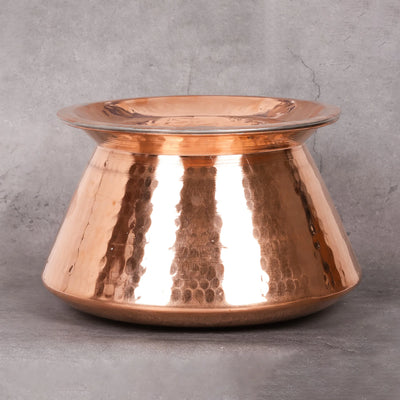
Copper Dutch Oven – Hand-Hammered Pot with Lid, Tin-Lined (Kalai), Non-Toxic, Solid Copper (Not Plated)
★★★★☆ 61 reviews🔥 6 people bought this in the last 30 days
Product Details
Description
This pan is 99.9% pure copper all the way through — no hidden steel core, no aluminum disc sandwiched between layers — lined with pure food-grade tin using kalai, the ancient Indian technique that predates every modern “non-toxic” coating. Other brands replace one coating with another (ceramic, enamel, anodized aluminum). We don't coat anything. We line with tin, the way it's been done for centuries — a tin layer that's inert, non-reactive with acidic foods like tomatoes and wine sauces, and FDA-recognized as food-safe.
How to Verify This Is Pure Copper (Not Plated)
When your order arrives, you can confirm the copper is solid — not plated — with these simple tests:
- The weight test: Solid copper is roughly 3× heavier than the same item in plated steel. Our products feel substantial in your hand.
- The magnet test: Pure copper is NOT magnetic. If a fridge magnet sticks to it, the item is plated steel. Our copper won't attract a magnet.
- The patina test: Leave the item exposed to air or lemon juice overnight. Real copper develops a natural greenish-brown patina. Plated copper doesn't.
How Our Copper Compares
| Feature | Copper Mart (this product) | Typical “Non-Toxic” Pans |
|---|---|---|
| Cooking surface | Pure tin (kalai), bonded to copper | Ceramic, enamel, or anodized coating |
| Base material | 99.9% solid copper | Aluminum or steel with thin copper plating |
| How it's “non-toxic” | No coatings — just tin over pure copper | Synthetic coating over base metal |
| Coating wear | Tin can be re-lined after years | Ceramic chips, anodized scratches off |
| Heat conductivity | Copper: 5× better than cast iron | Aluminum: adequate, steel: poor |
| PTFE / PFOA | None, ever | None (marketed) — still coated though |
| Made | Hand-hammered, tin-lined in Jodhpur since 1997 | Mass-produced in factories |
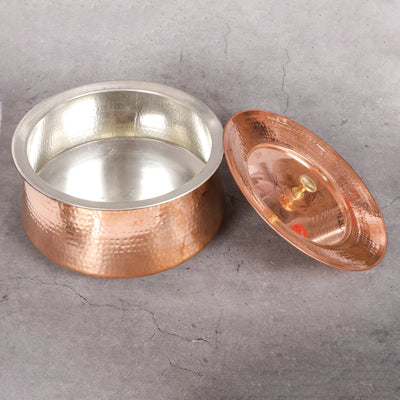
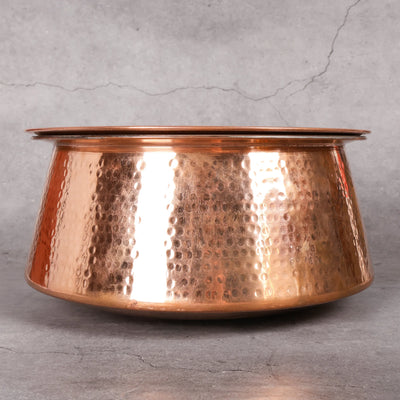
A copper pot built for slow cooking, braising, and one-pot meals — no coatings, no chemicals. This hand-hammered copper dutch oven (handi) is crafted from heavy-gauge pure copper with a traditional tin lining. If you're looking for a copper pot that distributes heat evenly for stews, curries, rice, and braises, this is the professional-grade choice. The tight-fitting lid locks in moisture and flavor.
Why a Copper Pot for Slow Cooking?
Copper conducts heat 25 times better than stainless steel, meaning your stew heats evenly from every direction — no hot spots that burn the bottom while the top stays cold. For slow cooking, braising, and one-pot meals, this even heat distribution is everything. Professional chefs have used copper pots for centuries precisely because the food cooks more uniformly. This copper dutch oven brings that same advantage to your home kitchen.
Non-Toxic Dutch Oven — Zero Coatings
Most dutch ovens use enamel coatings (which can chip and expose cast iron) or non-stick coatings (PTFE/PFOA). This copper pot has zero coatings of any kind. The cooking surface is pure food-grade tin (kalai) — a natural metal lining used in French and Indian copper cookware for centuries. When the tin wears after 5-10 years of heavy use, it can be re-applied. No synthetic chemicals ever touch your food.
Product Specifications
- Material: Heavy-gauge pure copper body, food-grade tin lining (kalai), copper lid
- Construction: Hand-hammered from a single sheet of copper
- Heat source: Gas, electric coil, ceramic glass stovetop (not induction)
- Coating: None. Traditional tin lining only. Zero PTFE, zero PFOA, zero enamel.
- Made in: Jodhpur, Rajasthan, India by Manish Metals (est. 1997)
- Care: Hand wash only. Polish exterior with lemon and salt. Re-tin when lining wears.
Best For
- Slow-cooked stews, curries, and braises — even heat, no hot spots
- Rice and biryani — the tight lid traps steam perfectly
- Soups and stocks — copper's heat distribution extracts maximum flavor
- Replacing enameled cast iron dutch ovens for a non-toxic alternative
- Heritage kitchen enthusiasts who value traditional craftsmanship
Dutch Oven Comparison
| Feature | Copper Dutch Oven (this) | Enameled Cast Iron | Stainless Steel | Ceramic |
|---|---|---|---|---|
| Heat distribution | Excellent — even from all sides | Good — slow but even | Poor — hot spots common | Good |
| Weight | Heavy (stable) | Very heavy | Medium | Medium |
| Toxic coatings | None | Enamel (can chip) | None | Glaze (varies) |
| Lifespan | Lifetime+ (re-tinnable) | Lifetime (enamel chips) | Lifetime | 5-15 years |
| Induction compatible | No | Yes | Yes | No |
| Price | $489 | $200-400 | $100-300 | $50-150 |
Copper Dutch Oven vs Enameled Cast Iron — The Non-Toxic Comparison
Enameled cast iron dutch ovens (Le Creuset, Staub) are marketed as non-toxic — but enamel is still a coating. When enamel chips, the cast iron underneath is exposed. Our copper dutch oven has no enamel, no coating of any kind. The cooking surface is pure tin, applied using kalai — a centuries-old Indian technique that predates every modern coating. Tin is inert, non-reactive with acidic foods, and FDA-recognized as food-safe. When the tin eventually wears after years of heavy use, it can be re-applied by a coppersmith. No enameled dutch oven can offer that. Copper also conducts heat 5x better than cast iron, which means your stews heat evenly from every direction — no hot spots, no scorched bottom.
Shipping & Guarantee
Free shipping to the United States. Estimated delivery: 7-10 business days. 5% off your first order — applied automatically at checkout. 7-day manufacturing defect guarantee.
You May Also Like
Key Features
✔️ Pure Brass Construction – Durable & Food-Safe
✔️ Even Heat Distribution for Authentic Dum Cooking
✔️ Handcrafted for Traditional Aesthetics & Quality
✔️ Ideal for Biryani, Pulao & Slow-Cooked Delicacies
✔️ Available in Multiple Sizes for Every Occasion
Health Benefits & Usage
- Perfect for cooking Dum Biryani, Pulao, and slow-cooked recipes.
- Suitable for gas stoves, wood-fired stoves, and open-flame cooking.
- Ideal for home chefs, caterers, and authentic Indian cuisine lovers.
Benefits:
- Enhances Flavor: Retains the authentic taste of spices with slow, even cooking.
- Durable & Long-Lasting: Made from high-quality brass for years of use.
- Heat Retention: Keeps food warm for a longer time.
- Aesthetic Appeal: Traditional design adds elegance to your kitchen and dining experience.
- Health Benefits: Brass cookware is believed to boost immunity and aid digestion.
Is a copper pot good for cooking?
Is this copper dutch oven non-toxic?
Can I use a copper pot on an electric stove?
How do I care for a copper dutch oven?
Is copper better than enameled cast iron for a dutch oven?
Complete Your Collection
You May Also Like

 Save 5%